All Categories
Featured
Expert Standards For Delaware Solar Panel Installation Co...
When You Analyze The Overall Cost Of A Delaware Solar Setup
Comparing Quotes From Reliable Pennsylvania Solar Panel I...
How To Assess Quotes From Washington DC Solar Panel Insta...

The Facts About Hiring Pennsylvania Solar Panel Installation Companies
Table of Contents
- – How To Recognize Quality Pennsylvania Solar Pan...
- – Exploring Your Pennsylvania Solar Panel Instal...
- – Your Guide To Setting An 85–100% Annual Consum...
- – How You Can Evaluate The Offerings Of Your Pen...
- – How Does The $7,000–$18,000 Battery Storage Ad...
- – How You Can Prepare For Pennsylvania Solar Pan...
How To Recognize Quality Pennsylvania Solar Panel Installation Companies
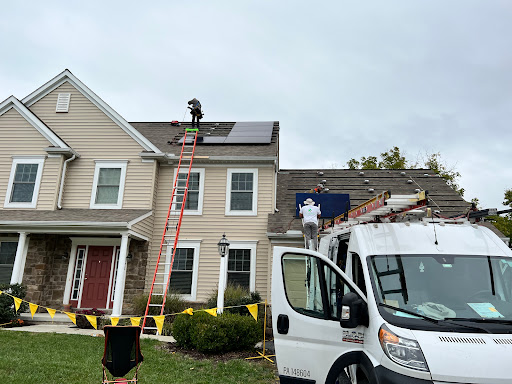
When you begin researching Pennsylvania Solar Panel Installation Companies, you are essentially assessing how a technical support provider will transform your roof into a dependable power generation asset. Because the cost per watt in Pennsylvania averages approximately $2.58, you must comprehend how equipment quality, construction integrity, and local regulations affect the lasting value of your investment. You require to find an installer who balances the technical needs of your site with the monetary realities of state-specific incentives and grid credit program policies. By mastering the mechanics behind system sizing and warranty coverage, you gain the capability to discern between high-performing installations and those that may fail to meet your energy goals. This article offers the essential knowledge required to explore the marketplace and select a competent professional to oversee your project.
“An undersized system won't meet your energy needs, while an oversized one represents wasted.” — Lumina Solar PA
Exploring Your Pennsylvania Solar Panel Installation Company Options
Pennsylvania Solar Panel Installation Companies compare primarily through their compliance to rigorous safety and legal standards, which protect you from financial liability and guarantee high-quality workmanship. A legitimate solar firm must possess active electrical and general contractor credentials, as these demonstrate that the business has satisfied the specific technical and regulatory requirements mandated by state and local authorities to execute electrical work on your property.
“The Home Improvement Consumer Protection Act shall apply to all contractors (including subcontractors and independent contractors) that own or operate a home improvement business and perform services at private residences whose revenue exceeds $5,000.00 on an annual basis.” — grimlaw.com
Beyond fundamental licensing, you must confirm that an installer possesses robust insurance coverage to mitigate the risks inherent in rooftop construction. When you assess different firms, prioritize those that provide transparent documentation regarding their operational safety protocols. The following table details the necessary documentation you should request during your first consultation to verify a company's legitimacy:
| Document Type | Purpose |
|---|---|
| State/Local Contractor License | Confirms legal permission to function in your jurisdiction. |
| General Liability Insurance | Protects your home from damage during the installation process. |
| Workers' Compensation Insurance | Stops you from becoming liable for injuries incurred by crew personnel. |
| Electrical Permit Records | Verifies the installer adheres to local building and safety codes. |
Verifying these credentials is a vital step in your due diligence procedure. If an installer cannot furnish proof of current insurance or valid licensing, you should look elsewhere, as the risk of property damage or unpermitted work far outweighs any potential savings. Always contact the issuing authority listed on the provided license documents to verify that they are active and in good standing before executing a contract.
When assessing solar setup, you should first conduct a roof solar suitability assessment to calculate your system sizing, as systems are typically engineered to offset 85 to 100 percent of your annual electricity consumption based on local sun hours. To grasp the economics, compute your solar payback period by factoring in the average installed cost per watt of $2.58 alongside potential gains from solar renewable energy credits, which currently provide $250 to $480 in annual income. You should contact Solar Panel Installation to identify a licensed solar company with North American Board of Certified Energy Practitioners certification who offers a comprehensive contractor warranty, as this ensures your investment is protected while you explore financing options like a solar loan, a solar rental, or a solar service agreement. Since incorporating a solar battery can raise your total project cost by $7,000 to $18,000, you must carefully weigh these expenses against the long-term grid independence provided by utility buyback and the specific solar incentives Pennsylvania provides to lower your total solar panel price.
Your Guide To Setting An 85–100% Annual Consumption Offset Target
An 85–100% annual usage offset goal is the determined objective for designing a system to replace the overwhelming majority of your yearly electricity consumption using solar power. When you begin searching for and Finding reputable solar panel installation companies in Pennsylvania, they will first examine your last twelve months of utility statements to establish your baseline energy demand. This data is then cross-referenced with local insolation hours to guarantee the proposed array can produce enough kilowatt-hours to meet your specific household needs.
“Where net metering is one-for-one at retail — Pennsylvania, New Jersey, Virginia, Maine — sizing to 100% of annual usage is defensible, because an exported kilowatt-hour and a consumed one are worth the same.” — solaramerica.io
Several technical limitations affect the ultimate capacity of your solar panel installation:
- Available Roof Surface: The entire square footage of unshaded, south-facing roof area restricts the number of panels you can physically mount.
- Utility Buyback Policies: Regulations often cap the maximum system size allowed based on your historical annual consumption, preventing oversized arrays that send excessive power to the grid.
- Energy Efficiency: Reducing your base load through home improvements can allow for a smaller, more cost-effective system to achieve your offset target.
If you are planning your installation, use the following table to understand how consumption data determines sizing requirements:
| Annual Usage (kWh) | Typical System Size (kW) | Estimated Offset |
|---|---|---|
| 8,000 | 5.0 | ~85% |
| 15,000 | 9.5 | ~95% |
| 20,000 | 12.87 | ~100% |
Request a detailed production estimate from your solar contractor that accounts for your specific roof orientation and local shading factors before determining your system capacity.
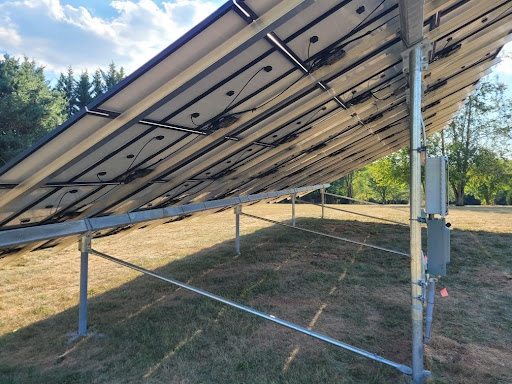
How You Can Evaluate The Offerings Of Your Pennsylvania Solar Panel Installation Contractor
You confirm the technical proficiency of Pennsylvania solar panel installation companies and what they offer by favoring those that hold a current NABCEP accreditation. This designation serves as the industry benchmark for proficiency, confirming that a solar company has mastered the complex technical specifications for photovoltaic system design, electrical safety, and site-specific installation standards. Because solar setup involves integrating high-voltage electrical components with your home's structural integrity, vetting the specific credentials of the technicians executing the work is vital to ensure long-term system performance and safety.
“The Commonwealth of Pennsylvania does not maintain a list qualified solar energy installation companies.” — pa.gov
Beyond this primary credential, you should evaluate an installer based on their ability to oversee the entire project lifecycle. A skilled technician does more than mount hardware; they navigate the intricate regulatory landscape required to bring your system online. Use the following criteria to differentiate between potential service providers:
- Technical Credentialing: Verification of active NABCEP license for the lead technician on your project.
- Permitting Proficiency: Established history of handling local zoning, electrical permitting, and utility interconnection paperwork.
- Site-Specific Engineering: The capacity to plan a layout that accounts for local climate conditions, such as roof pitch and shading, to maximize output.
- Structural Integrity Oversight: Proven techniques for sealing roof penetrations to stop water damage over the 25-year lifespan of the equipment.
Before signing a contract, request a list of three recent local projects and verify that the installer maintains active, up-to-date liability and workers' compensation insurance.
How Does The $7,000–$18,000 Battery Storage Add-On Expense Impact Your Solar Panel Installation?
A $7,000–$18,000 battery storage add-on cost represents the financial investment required to integrate energy retention hardware into your Pennsylvania solar panel installation. This investment functions by capturing excess electricity generated during daily sunlight hours, allowing you to use that power during the evening or to maintain essential circuits when the grid experiences an outage. When evaluating Pennsylvania-based solar panel installation companies to consider, you should recognize that the specific price within this range depends heavily on the storage capacity and the chemical composition of the battery units selected for your home.
“House Bill 2380, sponsored by Rep. Nikki Rivera, D-Lancaster, was approved by the committee by a 14-12 vote, which would establish targets for battery energy storage programs.” — pahouse.com
The decision to incorporate a battery backup system involves weighing precise performance compromises against your household energy goals:
| Feature | Standard Solar Only | Solar with Battery Storage |
|---|---|---|
| Grid Independence | Minimal | High (during outages) |
| Evening Usage | Purchased from grid | Stored solar energy |
| Project Complexity | Lower | Higher |
Beyond the upfront financial impact, you must also weigh the physical requirements of a battery system, including the necessity for a climate-controlled installation space and specialized electrical integration. Not every solar vendor provides the same array of battery technologies, so it is vital to verify that your chosen partner has proven experience with the particular chemistry, such as lithium iron phosphate, that best suits your expected discharge cycles. Verify whether your preferred battery unit enables whole-home backup or is limited to a sub-panel of critical loads before completing your equipment list.
How You Can Prepare For Pennsylvania Solar Panel Installation Companies
Your property is ready for solar setup when your roof’s physical characteristics can maximize exposure to available sunlight, which is why you must evaluate your site before hiring Who are the top solar panel installation companies in Pennsylvania? The performance of your hardware depends on the geometry of your roof and the existence of external obstructions that obstruct light. In the regional climate, a south-facing roof surface provides the most reliable energy generation, though east and west orientations remain viable choices for many homeowners.
“Equipment shall impose no more than a 45 pounds per square foot (psf) point load in any location.” — phila.gov
To determine if your home is a candidate for a high-performance system, consider these critical site factors:
- Orientation: A true south-facing roof collects the most consistent daily solar energy.
- Pitch: A roof slope between 15 and 40 degrees maximizes the angle of incidence for sunlight.
- Shading: Nearby trees, chimneys, or neighboring structures produce shadows that significantly reduce total annual output.
- Structural Integrity: Your roof must be in good condition, as the structural load capacity must bear the weight of the hardware and withstand local weather pressures.
Beyond these variables, you should assess the age of your roofing material. Because a solar system installation is designed to last for decades, installing modules on a roof that needs replacement in the near future will result in unnecessary removal and reinstallation costs. Verify the remaining lifespan of your shingles or metal roofing before finalizing your project design.
Request a expert site survey from your selected installer to map your roof's precise shading patterns throughout the various seasons.

Table of Contents
- – How To Recognize Quality Pennsylvania Solar Pan...
- – Exploring Your Pennsylvania Solar Panel Instal...
- – Your Guide To Setting An 85–100% Annual Consum...
- – How You Can Evaluate The Offerings Of Your Pen...
- – How Does The $7,000–$18,000 Battery Storage Ad...
- – How You Can Prepare For Pennsylvania Solar Pan...
Latest Posts
Expert Standards For Delaware Solar Panel Installation Companies
When You Analyze The Overall Cost Of A Delaware Solar Setup
Comparing Quotes From Reliable Pennsylvania Solar Panel Installation Companies
More
Latest Posts
Expert Standards For Delaware Solar Panel Installation Companies
When You Analyze The Overall Cost Of A Delaware Solar Setup
Comparing Quotes From Reliable Pennsylvania Solar Panel Installation Companies